 Photo: Pixabay
Almost 40 percent of electricity in Serbia was produced in 2021 from renewable energy sources (RES), according to data from the Energy Agency. Of this, the most electricity came from hydropower plants (32.5 percent), followed by wind power plants (2.8 percent), and the remaining share is made up of small hydropower plants (MHE), solar power plants and biomass (2.5 percent of energy).
The Minister of Mining and Energy of Serbia, Zorana Mihajlović, stated back in May that "new capacities for the production of electricity from renewable energy sources are a pillar of energy security and stability, and that without investment there is no development of either the energy sector or the economy as a whole." At the time, she stated that the only way for Serbia to be energetically secure and independent is to increase the capacity to produce electricity from RES.
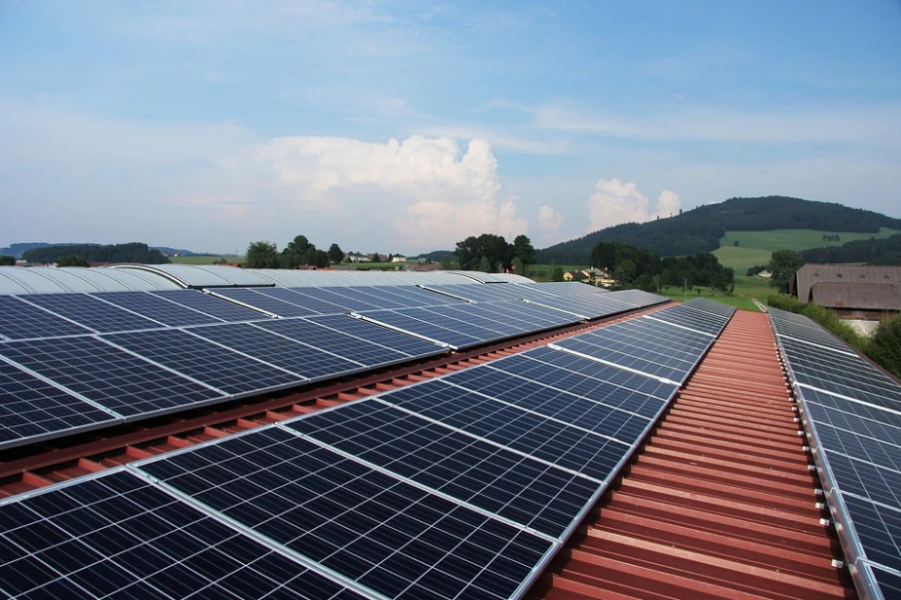
When it comes to the coverage of solar panels, energy and economic analyst Velimir Gavrilović tells Biznis.rs that Serbia has a modest coverage of solar panels in relation to developed countries, but also in relation to certain countries in the region that previously started with incentives for investing in RES. even in solar panels.
"For example, in 2021, solar power plants in Serbia produced only 13.5 gigawatt-hours (GWh) of electricity. This was negligible in the total electricity production, only 0.04 percent. On the other hand, there is a great interest of investors in investing in solar power plants on the ground, for production and delivery to third parties, but also for the investment of the consumers themselves in their own power plants, which would reduce the high expenses for taking electricity from the grid. Thus, consumers become producers at the same time, according to the so-called prosumer model (simultaneous producer and user of energy). Of course, all of them are stimulated by the incredibly high prices of electricity on the market, so it is to be expected that the number of solar power plants will grow rapidly," he said.
According to the international expert in the field of environment and renewable energy sources, Dušan Vasiljević, the coverage of solar panels in Serbia is not enough and they represent only one source of RES, currently the most convenient, because they do not require much preparation and can be installed quite quickly.
"We currently have around 50 MWh in operation in Serbia, but new solar power plants are constantly being built. The installation of home appliances suddenly became interesting, after the announcement of the Government of Serbia and the adoption of the Law on RES and the Decree on Prosumers. It is still very far from what could be made and used," Vasiljević said in an interview with Biznis.rs.
He emphasized that Serbia has an area of 60,000 hectares in roofs alone. If they were all covered with solar panels, we would have three times more electricity than is needed in all areas.
"If you had at least a quarter of them on each roof, you would cover half of Serbia's energy needs." So there is potential. It can't be done overnight, but I think it's a good solution and can be put to better use with smart policy. What the state should invest in is the electrical infrastructure, both when it comes to power plants and when it comes to prosumers, because the Regulation that was adopted does not work properly, which is why the users are very dissatisfied", according to Vasiljević.
SOLAR ENERGY IS THE BEST SUPPLEMENT TO THE ENERGY SYSTEM
Energy saving is a very current topic in the last month. Many believe that solar panels are part of the solution for our energy independence and savings, but certainly not the only one. And Velimir Gavrilović agrees with that statement.
"That's where the state and its energy companies (JP Elektroprivreda Srbije, Elektromreža Srbije, Elektrodistribucija Srbije) must act much more and more efficiently. Procedures for connecting power plants to the grid still take a long time. The network itself at many points in Serbia does not have the capacity to receive new production, so investments must be made in new transmission and distribution systems, but existing ones must also be overhauled. The state must in a fair and transparent manner regulate the calculation of energy costs that serve to balance the system. That price must be directly related to market prices and must be as predictable as possible for investors. These so-called balancing costs are the main obstacle to greater private investment in RES," Gavrilović believes.
When asked whether solar power plants are enough to bring us energy independence, international expert in the field of environment and RES Dušan Vasiljević says that it takes time to build the infrastructure, but that solar energy as a supplement is a good solution.
"Solar and wind generators, like all solutions, have their drawbacks. These are the so-called 'peak' energies, i.e. those that are only available when there is sun (during the day) or wind. In a technical sense, the electricity grid must be optimally loaded. In order to solve this, it has to be supplemented with something else at the moment when there are no renewable energy sources working on interruption. It is balancing energy, i.e. that which is needed to balance the system when there is no production from renewable sources, and then the operator (in our case EMS) must supplement it in order to maintain the network. There must be systems that will produce that balance energy or buy it, and that part must be planned together with the planning of RES. That's why there are initiatives to build reversible hydropower plants that have, among other things, that role, or to implement some other solution that would achieve greater production from RES, and at the same time that technical requirement for balancing electricity," explained Vasiljević.
In addition to the aforementioned regulation of the area of balanced energy and enabling the transmission and distribution system to receive new production capacities, Velimir Gavrilović estimates that the bureaucratic procedures in EMS and EDS must also be improved. Also, incentives for investing in solar power plants for households are, as he points out, more than modest and limited only to certain municipalities in Serbia.
"It is worth investing more money from the budget, because every MWh of reduced consumption from the grid also means a smaller loss for EPS." In this way, the consumption of electricity produced in thermal power plants and hydropower plants of EPS, as well as the amount of imported electricity, would be reduced. Serbia lacks up to 20 percent of electricity every day and that part is imported at extremely high prices. EPS will certainly make a loss during the upcoming heating season at the level of around 1.5 billion euros, and this will be covered by further borrowing, which is ultimately again guaranteed by the Serbian budget, i.e. the taxpayers. Therefore, the state should allocate more money and motivate consumers more intensively to install solar panels on the roof", concluded Gavrilović.
PROSUMERS JUST WANT THE REGULATION ENFORCED
Dragana Maričić from Ruma installed solar panels on her house, and she became a prosumer on May 5 of this year. She and her family were attracted by the Regulation on the criteria, conditions and method of calculating claims and obligations between consumers and suppliers.
"We looked at the power of the solar panels to cover the entire electricity consumption in the house, and based on that we chose them. The calculated average is that one kilowatt panel produces 1,200 kWh per year, and it is important that it is on the south side, because it is the most used. The problem arose when we realized that the Regulation, in which everything is perfect for us, is not being applied, so instead of exchanging 1 for 1 kW, it happened that our electricity bills were reduced by only 20 to 30 percent, so that our period it prolongs the investment payouts a lot," she explained.
She emphasized that meetings were held with the Ministry of Finance and the Ministry of Energy, where it was agreed to establish a Working Group that would deal with the problem of accounting and which was supposed to start work in mid-August. However, they still haven't received a meeting invitation.
"The state has announced a bill reduction of up to 30 percent for those who save energy." As prosumers, we are not covered by that discount. For those of us who have invested our funds according to the current calculation, which is not in accordance with the Regulation, the accounts are less than 20 to 30 percent. This means that they identified us with all the others who did not invest anything, and will receive a similar reduction and savings", Dragana Maričić points out.
THE EXACT NUMBER OF SOLAR POWER PLANTS IS UNKNOWN
The director of the company Terra Solar, which was founded with the intention of being an investor and working on the construction of its own solar power plants, Nikola Oklobdžija explained to Biznis.rs that there are only eight permits in Serbia that have been obtained for the construction of solar power plants on land. However, when it comes to solar panels installed on roofs, they generally, he says, do not have any permission.
"Unfortunately - or fortunately - many solar power plants located on the roofs of legal entities do not have any permit. They were built in the system for their own needs, they do not deliver a single kilowatt-hour to the energy system, and that is the reason why it is impossible to count the total installed solar power. Therefore, according to official statistics, solar energy is immeasurable," concluded Oklobdžija.
Source: biznis.rs